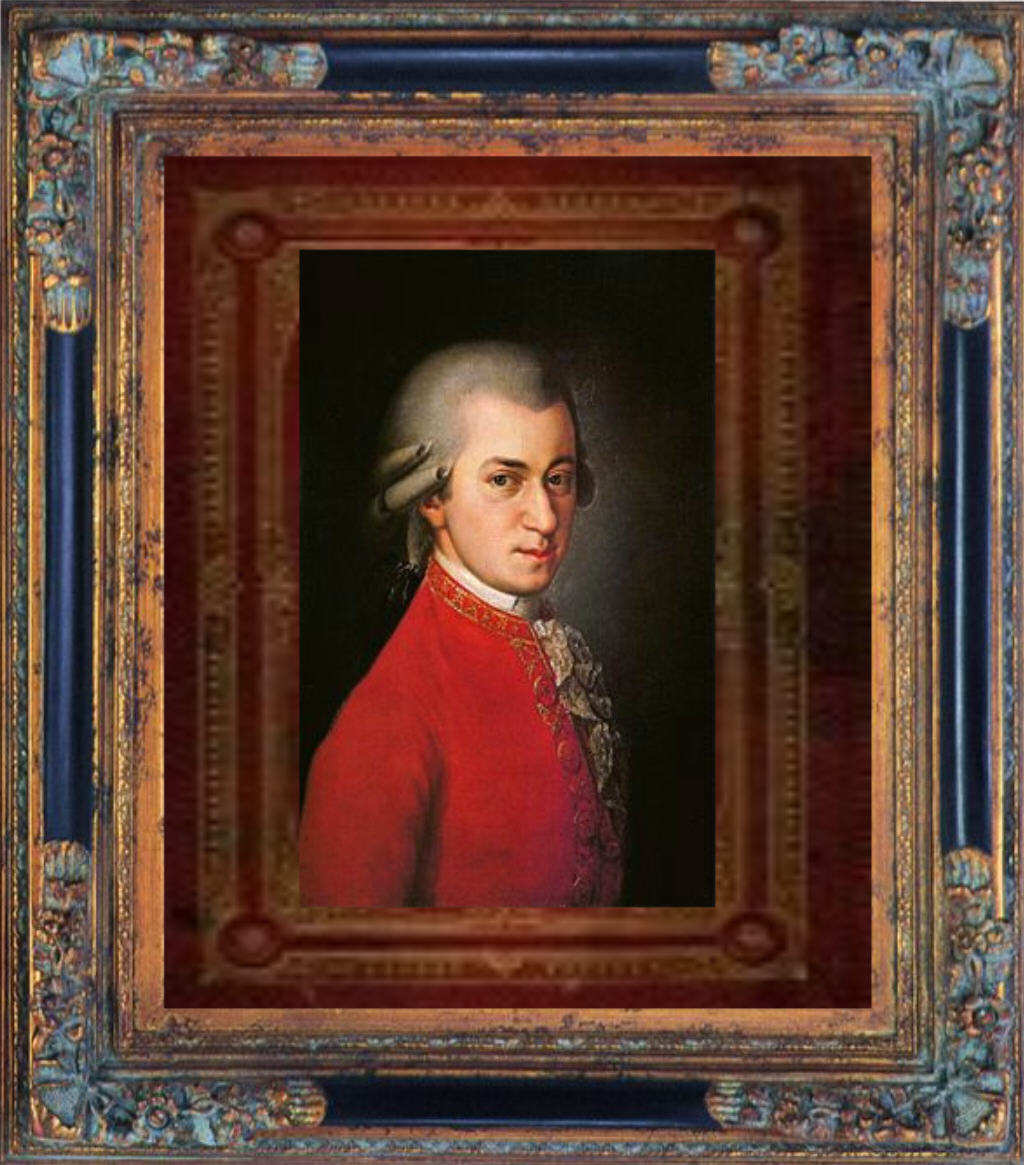
Carl Maria von Weber's works for the stage are considered to be the first German nationalist operas and as such they influenced composers of the next generation, especially in Germany. His early development of the lietmotif influenced Wagner to use the technique also. His orchestrations were studied by Berlioz and used them for examples in his Treatise On Instrumentation. Liszt, Mendelssohn and Chopin were influenced by his works for piano and orchestra, and 20th century composer Igor Stravinsky admitted that Weber was a model for his Cappriccio For Piano And Orchestra, written over 100 years after Weber's death.
The Konzertstück In F Minor was especially influential, not only for Weber's use of the orchestra, musical content and form (it is in 4 sections played without break), but for its extra-musical content. Weber had composed two piano concertos and when he had begun writing his third he wrote the following in a letter to music critic Johann Rochlitz:
I have an F minor piano concerto planned. But as concertos in the minor without definite, evocative ideas seldom work with the public, I have instinctively inserted into the whole thing a kind of story whose thread will connect and define its character - moreover, one so detailed and at the same time dramatic that I found myself obliged to give it the following headings: Allegro, Parting. Adagio, Lament. Finale, Profoundest misery, consolation, reunion, jubilation.
Weber was taken up with work on other compositions and didn't get back to the third concerto, which he had renamed Konzertstück,until 1821. In fact, on the morning of the premiere of his opera Der Freischütz he finished the Konzertstück. It was premiered a week later to (in Weber's words) "monstrous acclaim", and the work has been a popular concert piece ever since.
Weber himself played the piece for his wife and Julius Benedict, a German composer and conductor. According to Benedict the composer gave a running commentary as he played the piece, which shall be quoted below:
Larghetto affetuoso - Beginning in F minor, the sad and reflective music has a story Weber described as he played : A lady sits alone on her balcony, gazing off in the distance. Her knight has gone on a Crusade to the Holy Land. Years have passed, battles have been fought; is he still alive? Will she ever see him again? Allegro passionato - In a state of panic (and still in the key of F minor), Weber described her state of mind: Her excited imagination summons a vision of her noble husband lying wounded and forsaken on the battlefield. Could she not fly to his side and die with him? She falls back, unconscious. Then from the distance comes the sound of a trumpet (represented by a solo bassoon). There in the forest something flashes in the sunlight as it comes nearer and nearer. Tempo di marcia -The music has now changed to C major in a wave of celebration: Knights and squires, with the Crusaders' cross and banners waving, are acclaimed by the crowd. And there her husband is among them! She sinks into his arms (represented by an octave glissando on the keyboard)
Presto giocoso - The solo piano erupts in rapid scales and figures, the music modulates to F major as the soloist plays brilliant passages, including two more grand glissandos as Weber concluded his story: Happiness without end! The woods and waves sing a song of love, while a thousand voices proclaim its victory.
Weber's Konzertstück is the quintessential early Romantic work for piano and orchestra. It is no surprise that Liszt played it many times in his career and even wrote his own version of the piano part. Liszt (as well as other composers) used the connected movement form of it for their own works for piano with and without orchestra.
In 19th century musical life, the region of Germany and
Austria reigned supreme. For those ambitious enough to want international
recognition as a composer, the best way was to be acknowledged in Germany. All
of the master composers of the 19th century had connections with Germany, if
not by birth by other connections such as studying there, living there, or
knowing the right people there.
Fortunately for many composers, there were famous men of the
time that helped otherwise unknown composers get their foot in the door.
Perhaps the most magnanimous was Liszt, who met, encouraged and promoted many
younger composers of his time. Liszt used his fame (and in many cases his
fortune) to help many composers, the most famous being Wagner. One name
that is not thought of as a promoter of another composer's works is Johannes
Brahms.
The most prevalent impression of Brahms is an acerbic
bachelor that had little use for any of his contemporaries, especially the
leaders and followers of the 'New Music' movement led by Liszt and Wagner. Even
when Brahms had something good to say about someone else, as a contemporary
once said of him, "His compliments sting like salt in the eyes."
Brahms once visited an acquaintance that was a minor composer. Brahms got
there and saw the man playing outside with his children. His wife apologized,
saying that her husband composed so much that he had little time to stop.
Brahms replied, "Thank God, it should happen more often."
Brahms could be a cantankerous personality, and there's been
much speculation about his childhood and early adulthood and how it formed his
personality. But the truth is that Brahms actually did acknowledge the genius
of Wagner and thought that his opera'The Mastersingers
Of Nuremburg'as a high point in German art. That he
disliked what he thought was the undue influence of these composers with
younger composers is to be expected, given Brahms conservative nature.
But Brahms could be a devoted friend, and there is at least
one example of his giving his help to an up and coming composer. Brahms was on
a panel that was to select a gifted composer in the Hapsburg Empire to grant a
stipend to help them keep composing. It was then that Brahms was amazed at the
huge volume of music Dvořák entered in the competition. Brahms was instrumental
in seeing that the stipend was awarded Dvořák not only that year, but the next
two years also. Brahms sent letters to his publisher Simrock about Dvořák's
music and even worked as a copyist and editor of the music to help speed up its
publication. That Dvořák was appreciative is an understatement. They remained
very good friends until Brahms death.
Dvořák wrote the Cello Concerto near the end of his time in
New York City in 1894-1895. It had its premiere in 1896 in London,
England, which was conducted by Dvořák.
I. Allegro -The first movement begins quietly with
clarinets and low strings. The orchestra reaches fortissimo and the theme
continues in a robust manner. The orchestra gradually calms until the gentle and
lyrical second theme is played by the horns. A rousing third theme rounds out
the orchestral part of the exposition. Dvořák labels the cello entry with its
version of the first theme quasi improvisando, like an improvisation. The
cello’s version is punctuated by triple stops. A long section of trills by the
soloist lead to a quickening of the first theme that leads to the cello’s
version of the second lyrical theme.
The development section begins with a section for orchestra
that expands the first theme until the cello plays a more lyrical version of
it. The music quickens as the cello plays accompanying figures in sixteenth
notes as the woodwinds continue to develop themes. The cello becomes more
animated and complex with rapid double stops, and a climax is reached when the
cello plays in chromatic octaves until the second lyrical theme is played in a
louder version. The cello soon takes it back up and returns it to its
gentleness. The cello plays rapid arpeggios and leads to the first theme once
again, which after an increase in tempo brings the movement to an end in B
major.
The last piece of music of Dvořák’s that Brahms worked on
was the Cello Concerto. He corrected the proofs and played the piano reduction
of the orchestra with a cellist and is reported as saying, "If I had known
that it was possible to compose such a concerto for the cello, I would have
tried it myself!" No doubt this vast, virtuosic, and complex movement had
a lot to do with that comment.
II. Adagio ma non troppo -Dvořák’s sister-in-law who
he was very fond of inspired the second movement. He was in love with her but
it didn't work out so he ended up marrying her sister. In the
movement Dvořák quotes one of his own compositions, a song that he wrote
that was one of his sister-in-law's favorites. She had been taken ill
while Dvořák was composing the score. The woodwinds begin the movement, and the
cello enters with a theme in G major. A
more spirited middle section leads to the return of the initial theme with a
version played and elaborated by the horns before the cello plays a solo that
involves playing with the bow while accompanying itself with pizzicato notes on
an open string. The movement gently ends as it begins.
III. Allegro
moderato - Andante - Allegro vivo - A theme that seems related to the first
movement first theme is played by the horns. The music turns ever more rhythmic
with a call and response section for cello and orchestra. A new theme enters
and is developed. The opening theme returns and leads to another episode a few
times. Themes from the first and second movements reappear. After Dvořák came
back to his homeland from New York, his sis-in-law died, and he added this
slow, quiet section to the concerto as a tribute. After this is played through,
the orchestra ends the movement with a flourish in B major.
The 1935 film The Bride Of Frankenstein is a rarity in the movie world; a sequel that actually has been regarded by many as superior to the original Frankenstein of 1931. That is a matter of opinion for the most part. The original Frankenstein made by Universal Pictures followed their first foray into sound horror films with Dracula, which has it's own proponents and critics. It is difficult to realize how much these early sound horror films actually terrified some in the audience. My Mother was a teenager in High School in 1931 when Frankenstein came to theaters. When I was a kid and Frankenstein was going to be shown on Saturday night television, she told me that she saw it with her girlfriend, and she remembered the scene where the monster is first seen, when it backs into the room and there are two jump shot close-ups of his cadaverous face. She said there was a collective shriek of various intensity in the theater, it was so startling. And by the time the movie let out, it was dark outside and that she and her friend ran all the way home!
The most acknowledged first sound feature was The Jazz Singer with Al Jolson on 1927, but it was far from the first sound film (and only half of it was sound.) Sound had been synchronized with film in an exhibition in 1900 in Paris, France, and even earlier, but did not become viable until the mid 1920's with Warner Brothers Vitaphone system producing a series of short subjects. This system used large acetate records that had to be synced by hand to the film, and was the first really successful sound film technology that lasted until 1931. 1931 was an important year for sound, as there were over 1,000 sound feature films made in the U.S.A. alone. In 1927, a little over 2% of all movies contained sound; by 1930 that number had jumped to over 96%! When technology was introduced that recorded the sound right on the same film as the pictures is when the sound film industry really took off. But it's good to remember that silent movies were not really silent-there was usually a piano playing appropriate snippets of classical music to fit the action. In the larger theaters there were large pipe organs with all kinds of imitative stops (some of which still survive and are used for silent film revivals), and the really high quality movies would have scores written for them to be played by an orchestra. So the idea of music playing along with the film wasn't a new idea, but it had to wait for audio technology to catch up.
Dracula only had music in the opening and closing credits as well as a short scene at the opera, while Frankenstein had no music within the movie itself, only the credits. Some have given this as one example that helped set the mood of the films. For one, I have heard Dracula with music written by Philip Glass, and I see no advantage to having a score. Granted, it's a score for string quartet, and no doubt after seeing the movie so many times in the original version I don't think I could ever enjoy it as much with a score. I just listened to the Overture of the music for the film Frankenstein by Michael Shapiro, who has taken a much different direction than Glass did for Dracula! Strange sounds, perhaps noises would be better, but still somewhat traditional. I would really like to watch the film with the entire score being played. He has conducted it many times with the film playing, and as a coincidental piece of trivia, Shapiro scored it for a chamber group of 22 players, the exact same number of core players Waxman had for The Bride Of Frankenstein!
By 1935 film music was being utilized more often by filmmakers to help set the mood and enhance the overall effect. The score for The Bride Of Frankenstein set in motion the necessity of having music for a horror movie. Franz Waxman's score is iconic, not only enhanced James Whale's direction (he had insisted on having Waxman write the music), but created some of the most time-honored music cliches in horror music history.
Franz Waxman was born in Germany, was educated at the Dresden Music Academy He put himself through school by playing popular music, and after his schooling was over, worked as an orchestrator for the German film industry. He was severely beaten by Nazi sympathizers in Berlin in 1934, and he joined many other Jews in leaving Germany. He first went to Paris, and soon after to Hollywood.
Waxman met the director James Whale in Hollywood, who knew some of his film music and was impressed. He had Waxman hired by Universal to compose the music for the upcoming Frankenstein sequel.
Waxman's resources were limited as to the number of musicians he had. His basic core orchestra was 22 players, but for certain scenes he had as many as 40. It's not known exactly how many of each instrument he had access to, but roughly he used:
3 flutes, with one doubling on piccolo
2 oboes, with one doubling English horn
3 clarinets including a bass clarinet
2 bassoons, one doubling on contra-bassoon
4 horns
3 trumpets
3 trombones
1 tuba
1 timpani player
3 percussionists
1 Harp
1-2 keyboard players for piano, celeste, and the essential pipe organ used to fill out the harmonies
A greatly reduced string section, exact numbers unknown.
Musicians would come and go as needed for recording specific scenes. Waxman used many techniques to help compensate for the low number of players. In the strings, he had them play double stops, even with tremolos, woodwinds and brass he used flutter-tonguing.
Waxman uses the technique of lietmotif, a musical phrase that is consistently used for a character, mood, or place. He uses them throughout the score, with 5 major ones:
The Monster's lietmotif - Played by the brass, a 5-note phrase containing dissonant minor 2nds to make it harsh, and flutter-tonguing to imitate growling. Waxman varies the speed and volume according to the situation.
Agitation lietmotif - played by the strings at a high speed and frantic in mood, represents the monster in flight or anger.
The Bride's lietmotif - A short 3-note phrase, usually delicate and played by strings and woodwinds with harp glissandos, but it can also be dissonant, foreshadowing the fate of the bride.
Dr. Pretorius's lietmotif- It's in a minor key, stepping downward, played in the woodwinds especially the bassoon, and a celeste.
Creation lietmotif - A steady, driving beat by the timpani, along with high ghostly strings and bells, plays in the creation.
The creation of the bride is the key scene in the picture, and it is best to listen to the original sound track from the movie, even with its less than pristine sound:
It begins with deep rumbling in the strings, with the monster's theme played over it with sweeps of the harp. The woodwinds along with a muted trumpet lead to the agitation theme in the violins. Dissonant soft chords are played under the theme and the incessant thump of the timpani begins. More agitation from the strings leads to a short playing of the bride's theme. The themes appear, reappear, until an extended and developed section of the bride's theme. The timpani beats all alone, with a slightly varying rhythm until it is joined by woodwinds. The agitated strings create the mood of excited energy of Dr. Frankenstein and Dr. Pretorius as they work on the bride. The Bride's theme is heard on the pipe organ, then in the strings. The beating timpani beats alone again, until a descending figure enters to bass clarinets playing a low theme sustained by string tremolos. Then there is a motif that is repeated in different speeds and textures that leads to a sweeping section for brass. Then the brass play the bride's motif in dissonant minor seconds until it returns in it's usual form. I then transforms into a glittering, shimmering repeat that is interrupted by the monster's theme. Continual agitation leads to a final dissonance, and the bride's theme resounds, with the the timpani playing a two note motive as the section leads to:
The exposure of the bride's alive eyes after bandages are removed! She is presented with the ringing of bells. The monster theme is heard as the monster approaches. He tries to get close to her, the bride's theme is heard. He takes her hand, but she is repelled by him! The monster tells Henry Frankenstein and his wife to leave, and the monster pulls the lever that destroys him and Dr. Pretorius.
I've included all of the final 16 minutes of the film, as the entire scene is needed to resolve the music.
What is also heard is an orchestration of the scene done by the conductor Charles Gerhardt, which is below. There is also an orchestration by Kenneth Alwyn.
The Gerhardt orchestration runs a little over 7 minutes. It's a good representation of the original and uses a synthesizer for some of the sounds. It has the advantage of having clear sound and the score to follow (when you can). I'm assuming Gerhardt kept most of the techniques used by Waxman, and the double stops in the strings can be seen here. Contrary to what has been written about the original film score, Waxman did not use the Ondes Martenot, an early type of synthesizer, in his score. Waxman did use it in other films before and after Bride Of Frankenstein, but not in that film. All of his effects were done by masterful use of his limited resources. Gerhardt takes the creation scene through most of what the original did, from when the start of the timpani heartbeat begins up until the mock wedding bells begin.
For the sake of completeness, the orchestration by Kenneth Alwyn is below.
His orchestration is for 60 players, and also includes a synthesizer. It's longer than Gebhardts, goes from the beginning of the timpani heartbeat to a short coda of the bride's theme in a loud finish.
Both of these orchestrations are very well done in modern sound, but there's still much to be said for Waxman's original score used in the film. Hollywood was an assembly line of movie making, so most composers like Waxman did not orchestrate their work. He was more than capable, but thestudios always had projects that needed creative composers to write the music, and give an extended outline and instructions to the orchestrator to get it all down on paper for the musicians. And I'm sure that Waxman kept an eye on things when he could.
Waxman went on to compose many more film scores, and was acknowledged a master by all after his score for Alfred Hitchcock's 1940 film Rebecca. He was allowed to write a full orchestral score for the film, and the ethereal music was hailed as a 'soundboard for the subconscious' by the film director Jack Sullivan. Waxman also composed music for the concert hall.
Waxman was considered at the peak of his talent when he died of cancer in 1967 at the age of 60.
Prokofiev wrote a set of variations for piano in 1913, and
over the years continued to expand on it until it took form as his 3rd
piano concerto in 1921. The work is now one of Prokofiev’s most popular, but
that wasn’t the case after its premiere. It took a few years for the concerto
to develop in popularity until it became one of the mainstays of piano concerto
literature in general, and one of the best concertos of the 20th century.
I.
Andante - Allegro - The work begins with a soft rendition of a theme, first
by a solo clarinet that is joined by another. The orchestra takes up the theme,
but briskly whisks it away as it builds in speed and volume. The soloist enters
with a different theme, and this builds to a climax, after which the soloist
plays a short cadenza that fades away as another theme is played by the winds
accompanied by the strings and the clicking of castanets.
The piano and orchestra comment on some of the material
heard until the orchestra takes up the opening clarinet theme. The soloist plays
an expansive variant of the theme. After tremolo strings softly play in
accompaniment to the piano, the piano descends in a delicate figure that ends
with the orchestra beginning to chug out the opening of the fat-paced material
heard in the beginning, and orchestra and soloist rapidly bring the themes back
from the exposition. The whirlwind of
piano and orchestra returns one more time and brings the movement to a close
with a bang.
II. Tema con variazioni - The theme is played by flute and clarinet,
and is followed by 5 variations:
1.The piano broadens the theme and is joined by the
orchestra that repeats the theme, as the soloist plays high in the treble.
2.A trumpet plays the theme as soloist and orchestra play a
rapid accompaniment.
3.The theme is barely recognizable as it is torn asunder by
the soloist as the orchestra tried to get things back on track, but not for
long.
4.The theme has transformed to an ethereal dream as the
orchestra and soloist slowly unwind the mystery.
5. The music quickens as orchestra and soloist pound out
parts of the theme, as it builds to a climax that quickly dissolves into a more
recognizable appearance of the theme. A coda helps the music wind down further,
until a low E minor chord ends the movement.
III. Allegro ma non troppo -Bassoons and pizzicato
strings play the A minor first theme while the soloist interrupts periodically
with a theme of its own. These two themes are developed until the tempo and
dynamics slacken with the second theme in C-sharp minor. The piano interrupts
this theme as well with another of its own before the C-sharp minor theme returns
with the mood taking a late Romantic turn as it is developed. Shifting
harmonies change the theme as the soloist plays rippling scales. A climax is
reached, and the quiet return of the first theme begins.
The soloist’s part becomes a virtuosic tour deforce as the
pace is quicked, along with very difficult maneuvers such as double-note
glissandos for each hand. Prokofiev’s piano technique must have beene
impressive, for he premiered the work in Chicago in 1921 as soloist. The piano and orchestra continue to battle
each other until the final C major chord.
This composition was based on Russian Orthodox liturgical themes found by Rimsky-Korsakov in an old book. His idea was to highlight the pagan origins of the Easter Festival and how the more modern Orthodox festival and tradition had its roots in the old pagan ways. Rimsky-Korsakov was a non believer but he seems to have had an interest in the music of the church.Rimsky-Korsakov wrote his own program notes for the work, as written in his autobiography:
"This legendary and heathen side of the holiday, this transition from the gloomy and mysterious evening of Passion Saturday to the unbridled pagan-religious merry-making of Easter Sunday, is what I was eager to reproduce in my overture. . . . The rather lengthy slow introduction . . . on the theme “Let God arise” [woodwinds], alternating with the ecclesiastical melody “An angel cried out” [solo cello], appeared to me, in the beginning, as it were, the ancient prophecy of Isaiah of the Resurrection of Christ. The gloomy colors of the Andante lugubre seemed to depict the Holy Sepulchre that had shone with ineffable light at the moment of the Resurrection—in the transition to the Allegro of the overture. The beginning of the Allegro —the theme “Let them also that hate Him flee before Him”—led to the holiday mood of the Greek Orthodox service on Christ's matins; the solemn trumpet voice of the Archangel was replaced by a tonal reproduction of the joyous, almost dancelike tolling of bells, alternating now with the sexton's rapid reading and now with the conventional chant of the priest's reading the glad tidings of the Evangel. The Obikhod theme, “Christ is arisen,” which forms a sort of subsidiary part of the overture, appears amid the trumpet blasts and the bell-tolling, constituting a triumphant coda."
The work was composed in 1887-1888 and the premiere was lead by the composer late in 1888. It was one of his last works for orchestra as he devoted his time almost exclusively to writing opera. The work is full of orchestral color and shows Rimsky-Korsakov a master of the orchestra. It opens with the very different time signature of 5/2, and in the last section of the work time signatures of 3/1 and 2/1 are used.
Franz Liszt began planning the work as early as 1838 after
he saw The Triumph Of Death fresco by Francesco Traini in the Campo Santo in
Pisa, Italy. But until he dedicated himself to composing over traveling Europe
as the most famous virtuoso of his day, the first version was not completed until
1853. Liszt revisited the work in 1859
and completed the 2nd version, the version most often heard, in 1864.
The Romantic era in general had a certain amount of interest
in the subject of death, but Liszt took it even farther. He composed a number
of pieces that dwelled on the subject to the point of morbidity.
Totendanz is a set of variations (or as Liszt put it, a paraphrase)
on the Gregorian chant Dies Irae, or day of wrath, words that were taken from
the Bible that depicted the day of final judgement. The original Latin text and
music for Dies Irae date back to the 13th century. The chant is most
frequently heard in the Catholic Requiem Mass, and Liszt is just one of many
composers that used the melody in their compositions.
The Triumph Of Death fresco by Francesco Traini
Opening theme ‘Dies irae -The music begins with the
soloist playing deep in the bass of the piano in marked tone clusters while the
orchestra plays the theme. The piano
then plays the first of three cadenzas that span the compass of the keyboard
with the orchestra contributes short chords after each. The orchestra then
takes up the theme while the piano hammers out chords in the treble range of
the piano in rapid tempo that makes it sound like a huge 8-note tremolo. A
climax is reached and the music grows quiet. The piano has a solo that leads to
-
Variation I (Allegro
moderato) - The bassoon and violas play a variant of the melody, and the
piano repeats it. Clarinets and bassoon play the second part of the melody and
the piano repeats it, and leads to -
Variation II -The
left hand of the piano plays a variant of the theme low in the bass as the
right hand plays runs higher in the bass. A horn and pizzicato strings add to
the texture. The next part of the
variation has piano glissandos in the right hand, the bass plays a dotted
rhythm while trumpets and low strings are added. The drama increases as the
piano plays glissandos in both hands as the woodwinds and strings lend
accompaniment. This leads to -
Variation III (Molto
vivace) - The soloist goes back to the deep bass for an agitated section that
eventually climbs into the high treble. A full stop comes upon a D minor chord
that leads to -
Variation IV (Lento) -
For piano solo, this gentle canon gives some rest after the preceding
drama. After it has played out, a cadenza in B major (the only section of any
length in a major key in the piece) gives repose. The music then goes back to
the minor with a solo clarinet playing a simple variant of the melody with a
light piano accompaniment. Another
section of transformation begins abruptly with the piano increasing the tempo
to presto, with octaves in each hand leading to -
Variation V (Vivace) -The first part of the theme is rendered contrapuntally by solo piano in a
fugue with repeated notes. The orchestra joins the soloist and the music goes
somewhat a field to different keys. There is a section of the piano part that
has the directive strepitoso, meaning clamorous, impetuous. The section ends in
a long cadenza for the soloist and leads to -
Variation VI (Semper
allegro (ma non troppo)) -This is a mini-set of variations itself.
1.The horns play a figure in triplets while the orchestra, minus
the other brass, accompany.
2.The piano enters and plays a variant with pizzicato low
strings, flute and triangle.
3.Oboes, piano, strings, and the triangle play a variant.
4.The piano imitates hands as the woodwinds and strings fill out
the harmonies.
5.The figure is played in the bass of the piano with chords in
the right hand. Woodwinds fill in harmonies while the strings play col legno.
6.The piano plays a variant that is marked piacevole that is punctuated
by chromatic runs played by both hands a third apart that venture high into the
treble.
7.The piano accompanies with chords and octave runs while the orchestra
plays another variant.
This mini-set of variants
ends when there is another cadenza that has the Dies Irate played low in the
bass while a tremendous minor scale is played that covers the rest of the
keyboard. The glissandos appear again,
as the music leads up to a raucous closing. There is no written part for the
piano in the score, but it is not out of place for a soloist to play along with
the orchestra. There is a tradition for the soloist to play in contrary motion to
the orchestra with the final chromatic run and final chords.
The modern way in which
Liszt treated the piano in the middle of the 19th century was ahead
of its time. His percussive treatment of the instrument was a big influence on a
20th century fellow Hungarian composer, Bela Bartok.
The history of the term ballad begins with a type of French medieval narrative song which was generally danced to. Ballet derives from the same base word in French, so both words have the action of dance in common. While the etymology of the word may be French, the ballad was a narrative song or poem that has been historically found across Europe and England and was associated with minstrels for centuries.
This cursory description of an historical ballad has a direct bearing on the term as used in the instrumental form. The historical ballad tells a story in verse with or without music, while the Romantic era ballad is an instrumental work. More specifically, in the case of Chopin's use of the term, it is a musical composition for solo piano that tells a story in purely musical terms.
When the first ballade was published in 1836 it was considered somewhat of a novelty at the time, for no composer had used the term for a work for solo piano before Chopin. Chopin wrote four ballades (the spelling he used derives from French) during his lifetime, from 1831 to 1842. During his second trip to Vienna in 1831, he began to write the first ballade. He completed it in 1835 after he had moved to Paris. Each of the 4 Ballades are singular works. There are a few purely technical similarities between them, but musically and emotionally they are separate pieces. They contain some of the most difficult technical and interpretive challenges of any pieces for solo piano in the repertoire.
Lento - The ballade begins with seven bars of slow arpeggios in common time that serves as a recitative/introduction to the work.
Moderato -The short introduction blends into the first of two primary themes, a gently pensive theme in 6/4 time and the home key of G minor. After this theme is repeated and slightly expanded, a motive is heard and passage work leads to the second major theme with the indication,
Meno mosso - This theme is in E-flat major. This theme gets a proper hearing and elaboration, and leads up to the next section.
What has gone on before may be considered as the exposition of a piece in Chopin's personal use of sonata form, as the first theme reappears. It gradually leads to the reappearance of the second theme in a more powerful rendering in a different key. Another motive is heard, and leads to what can be considered as a recapitulation, although the themes appear in reverse order than they did in the exposition. A stunning coda begins, complete with powerful runs in both hands alternating with solemnly quiet chords until a thunder of octaves brings the piece to a close.
In the end, no amount of analysis, slight or detailed, will convey the strength of Chopin's artistry in this ballade. Or is there anything of much value to trying to tie the ballade with any kind of literary work. Chopin made no reference to any outside inspiration. It is as Chopin intended; a story told in purely musical terms to be understood by emotions and feelings brought on by the music. In that aspect, Chopin is one of the most Romantic of all Romantic era composers.
For any piece of music, there is only so much that can be notated on the page. It is of course the same way with language in a stage play. Stage direction can take it only so far, and to merely recite the words without the proper inflection or emotion would make for a pretty boring evening at the theater or concert hall. Of course that's where the skill, art and experience of the interpreter or performer of a piece comes into play. Within the directions given by the author or composer there exists an interpretive leeway that can make or break a performance.
There has been a slow and steady trend in music by composers to be very specific as to their intentions. Whether this is an all together good thing or not depends on the music in question and of course the listener's taste. But the music of history could be very sparse as to performing directions. Even the most basic tempo directions can be very sparse in the music of Bach. And here is one of the mysteries of Mozart's Fantasia in D Minor; It has very little performing directions outside of tempo indications, and the last ten bars are missing. Mozart evidently never got around to writing out the ending of the work or to notate more detailed dynamics or phrasing. Scholars believe that someone else besides Mozart wrote the last few bars of the work.
The piece has three unbarred cadenzas, numerous fermatas, and changes tempo often. The name Fantasia does mean a certain amount of freedom in performance, and with the lack of direction in the piece it assures a variety of performances will happen. And they have. But to the player that is also a scholar, there are indications as to a proper performance by the time period it was written in, the composer who wrote it, and the traditions of the time.
The circumstances that have made freedom of expression so prevalent for this piece have also added to the degree of difficulty of it. If the performer doesn't have the ability to blend the sections into a whole, the seams can be heard and it becomes a string of loosely connected musical ideas that no matter how attractive some of them may be by themselves, the overall piece will suffer from sectionalization. The notes themselves are not difficult. Bringing them together and making music with them is. But that can be said for many of Mozart's works. But this particular piece is somewhat of an enigma, and remains an interpretive challenge for any pianist who chooses to tackle it.
For a more in depth analysis of the piece, I recommend the essay: W. A. Mozart: Fantasia in D minor for Piano - Paradoxes of Style and Interpretation or Fantasies about the Fantasia;by Sophia Gorlin. The essay can be found at her website.
Dvořák's String Quintet In E-flat Major was a product of his stay in the United States as the director
of the National Conservatory of Music in New York City from 1892 to 1895. During the summer of 1893 he stayed in Spillville, Iowa where there was a community of Czech immigrants. Dvořák was a man with deep roots in his homeland, and the few months he spent in Spillville helped to aleve some of his homesickness. He wrote a letter to a Czech friend and described Spillvile:
Spillville is a purely Czech settlement, founded by a certain
"Bavarian", "German", "Spielmann", who christened the place
Spillville. He died four years ago, and in the morning when
I went to church, my way took me past his grave and strange
thoughts always fill my mind at the sight of it as of the graves
of many other Czech countrymen who sleep their last sleep here.
These people came to this place about 40 years ago, mostly from
the neighbourhood of Pisek, Tabor and Budejovice. All the
poorest of the poor, and after great hardships and struggle they
are very well off here. I liked to go among the people and they,
too, were all fond of me, and especially the grandmas and gran
dads were pleased when I played to them in church "God before
Thy Majesty" and "A Thousand Times we greet Thee".
It is very strange here. Few people and a great deal of
empty space. A farmer's nearest neighbour is often 4 miles off,
especially in the farms (I call them the Sahara) there are only
endless acres of field and meadow and that is all you see. You
don't meet a soul (here they only ride on horseback) and you are
glad to see in the woods and meadows the huge herds of cattle
which, summer and winter, are out at pasture in the broad fields.
Men go to the woods and meadows where the cows graze to
milk them. And so it is very "wild" here and sometimes very
sad, sad to despair .
He wrote the String Quartet No. 12 In F Major (American) as well as his 3rd String Quintet and other chamber music during his stay in Spillville. The quintet was first performed in New York City in January of 1894, and is in 4 movements:
I. Allegro non tanto - Dvořák's quintet is a viola quintet, that is to say it has an extra viola added to a standard string quartet. The viola was Dvořák's instrument, and the first movement opens with a short theme for solo viola. This theme is picked up by the cello and played in the minor mode. This is all by way of introduction to the actual beginning of the movement with the playing of the first theme by the violin. While Dvořák was in Spillville, he saw a troupe of Native American Indians that were passing through. He heard their songs and dances and was inspired to use some of the rhythms as in the second 'drum' theme of this movement. The exposition is repeated. The drum rhythm is used in the development section along with the other themes. The recapitulation leads to a coda that has a reference to the material heard in the introduction before the movement ends quietly.
II. Allegro vivo - A solo viola begins the second movement which is in B major. More rhythms reminiscent of drum beats punctuate this scherzo as the themes are played. The trio section is in B minor and is a long, rather sad melody played by the viola.
III. Larghetto -The third movement is a set of variations on two themes, the first in A-flat minor and the second in A-flat major. This double variation movement has 5 variations for each theme with the themes ending the movement in their original form.
IV. Finale. Allegro giusto - The last movement is a rondo filled with attractive melodies and more examples of how American music influenced Dvořák, and no doubt reminded him of his own beloved native music with the common factor in each being the pentatonic scale.
Antonin Dvorak (1841-1904) was a Czech composer best known for his nine symphonies, especially the 9th known as "From The New World", written while he was a music professor in New York City. But he also wrote ten operas, chamber music (more than forty works for string ensemble), for the piano and sacred music. Later in his career he also wrote five symphonic poems in the years 1896-1897: The Water Goblin, The Noon Witch, The Golden Spinning Wheel, The Wild Dove and A Hero's Song.
The Water Goblin is a creature of European mythology, with differences in the myth according to nationality. The Czech version of the goblin has a human body, with green skin. He's thought to be the cause of drownings, and stores the soul of the drowned victim in a porcelain cup. Some tales of the water goblin portray him as rather comical, but Dvorak used a poem based on the tale written by Karel Erben, a Czech poet, writer and collector of folk tales and songs. The Water Goblin portrayed in Erben's poem and used by Dvorak is most certainly not comical! A short sketch of the poem and story:
A mother warns her daughter to stay away from the nearby lake because of a dream she has had about the water goblin. The daughter ignores the warning, goes to the lake and just as she begins to do her laundry she falls in. The goblin claims her as his wife. Her existence is sorrowful in his watery kingdom, but they have a child that is the only light in her life. She begs the Goblin to let her go see her mother one more time. The Goblin thinks it over and reluctantly agrees but on three conditions; She mustn't kiss or embrace anyone; she must return after one day as soon as the bells ring out for Vespers; and lastly she must leave the child with him as a hostage to guarantee her return. The woman leaves and after a sad meeting between her and her mother the evening bell tolls, but her mother holds her back and prevents he leaving, which enrages the Goblin. He knocks on the door, saying the child must be fed. The mother refuses to open the door and demands the child be left with them. The Goblin is blinded by rage, and after awhile he returns to the lake. After a violent crash during a storm, the mother and daughter open the door and find the headless body of the child on the doorstep.
Pretty gruesome stuff for sure, but such is the way of folktales sometimes. The music is some of the best Dvorak ever wrote for orchestra. Rich in tone and orchestral color, it is a piece written by a master of the orchestra. And with the use of a little imagination, you can hear The Water Goblin cavorting through the orchestra.


.jpg)